How I Provide QA Consulting to My Clients and Companies
As a QA Consultant, my primary goal is to elevate the quality of software products
while optimizing processes, reducing risk, and ensuring business goals are met efficiently.
Here’s how I plan to deliver impactful QA consulting services to my clients and companies:
1. Understanding Business Goals and Product Vision
Before diving into technical processes, I start by understanding the client’s business model,
target audience, and product goals. This alignment ensures that my QA strategy directly
supports the broader objectives of the organization.
2. Assessing Existing QA Processes
I conduct a detailed audit of the client’s current QA practices—covering test planning,
execution, automation, defect management, and release cycles. This helps identify gaps,
inefficiencies, or bottlenecks that may be affecting product quality or delivery timelines.
3. Defining a Tailored QA Strategy
No two businesses are the same. I craft a custom QA roadmap based on the client's
development methodology (Agile, DevOps, Waterfall, etc.), product complexity, team size,
and release cadence. This includes selecting appropriate tools, frameworks, and test
environments.
4. Implementing Best Practices and Standards
I introduce industry-standard QA best practices such as:
Shift-left testing
Continuous integration & test automation
Risk-based testing
Clear documentation and traceability
Security and performance testing integration
These practices help teams improve coverage, reduce bugs, and accelerate time to market.
5. Training and Mentoring QA Teams
Beyond delivering solutions, I mentor in-house QA teams, upskill testers, and encourage a
quality-first mindset across departments. This ensures long-term sustainability and
continuous improvement, even after my consulting engagement ends.
6. Introducing Quality Metrics and Reporting
I define KPIs and quality metrics—such as test coverage, defect leakage rate, mean time
to detect/fix bugs—that help stakeholders track progress and make informed decisions.
I also help establish dashboards and regular reporting systems.
7. Continuous Feedback and Improvement
I believe QA is not a one-time service but an evolving process. I establish feedback
loops with developers, business analysts, and product managers to adapt QA practices
based on lessons learned and new challenges.
Conclusion
By blending technical expertise with strategic insights, I aim to be more than just a
QA provider—I strive to be a trusted partner who helps clients deliver secure, high-quality,
and reliable software. My consulting approach is collaborative, results-driven, and tailored
to unlock long-term success for every company I work with.





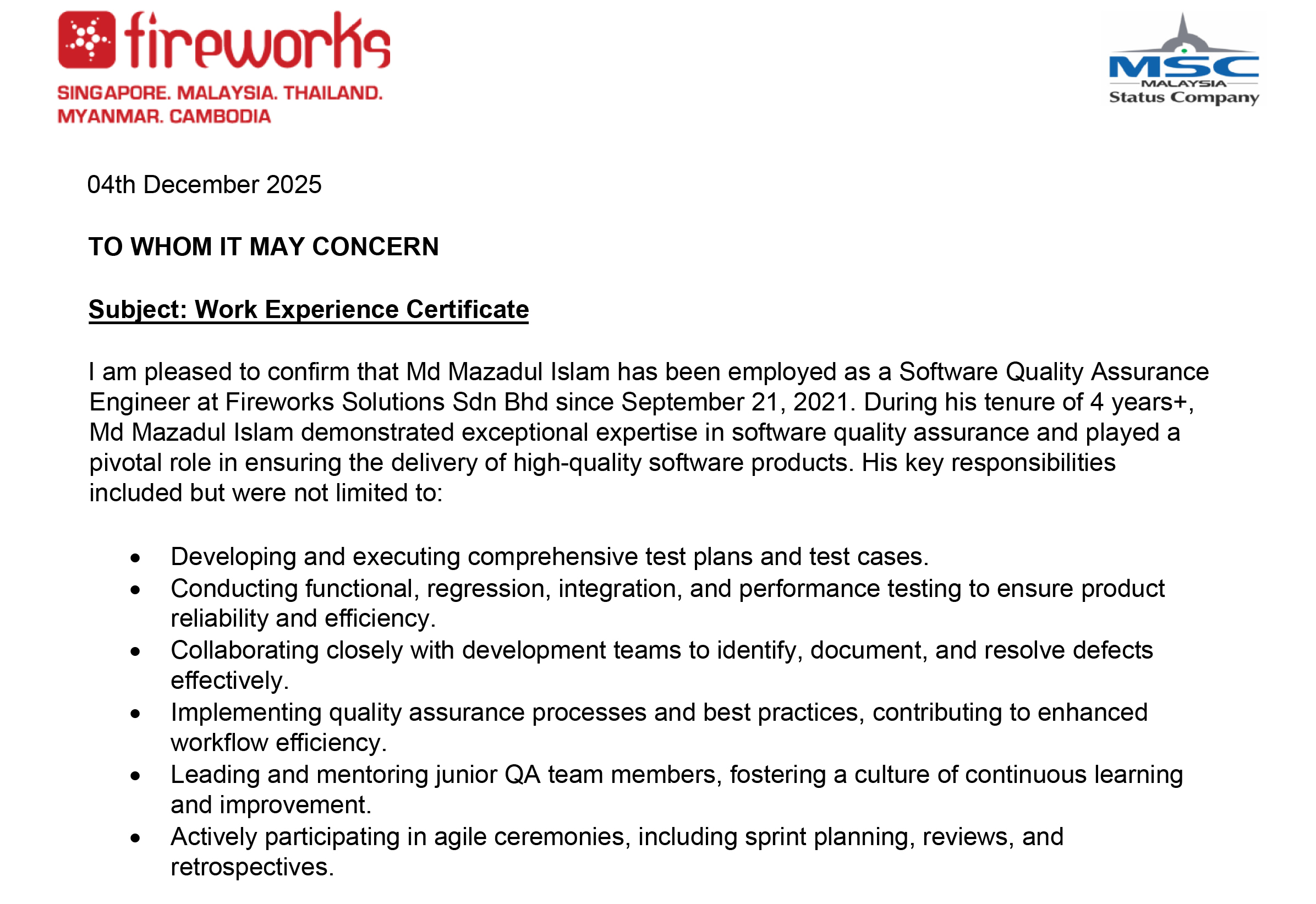
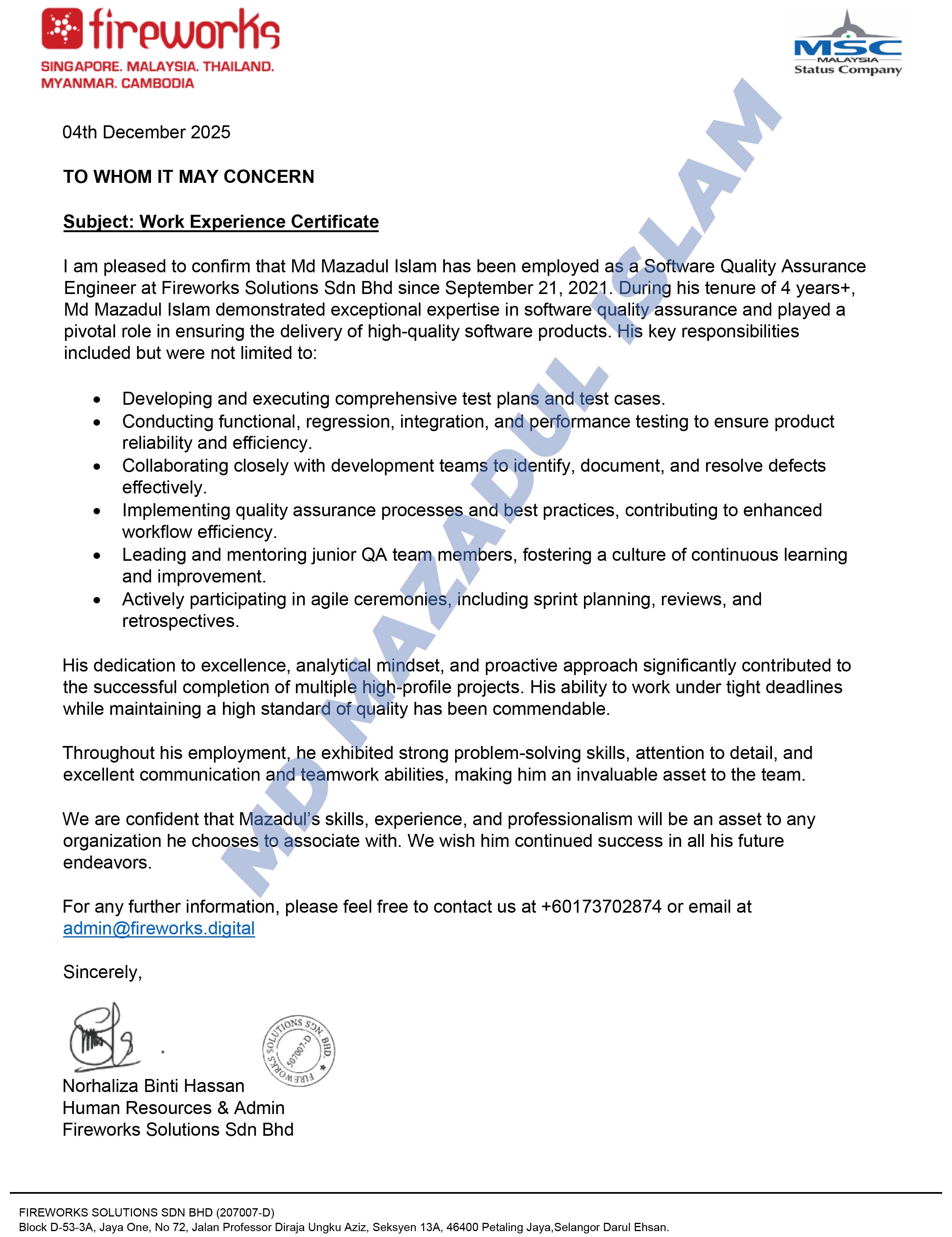
 Fireworks Solutions Sdn Bhd [09/2021 – 07/2026]
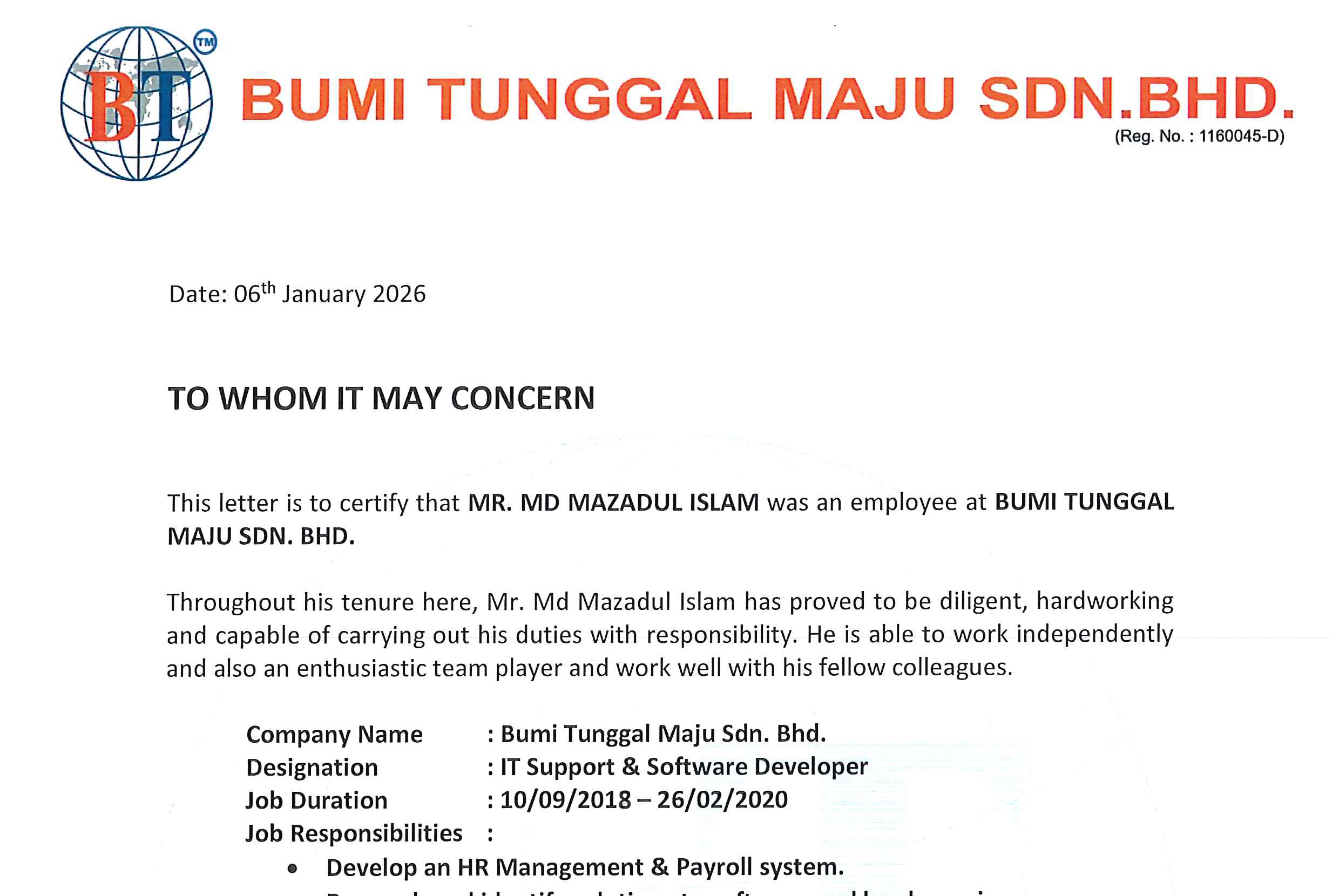
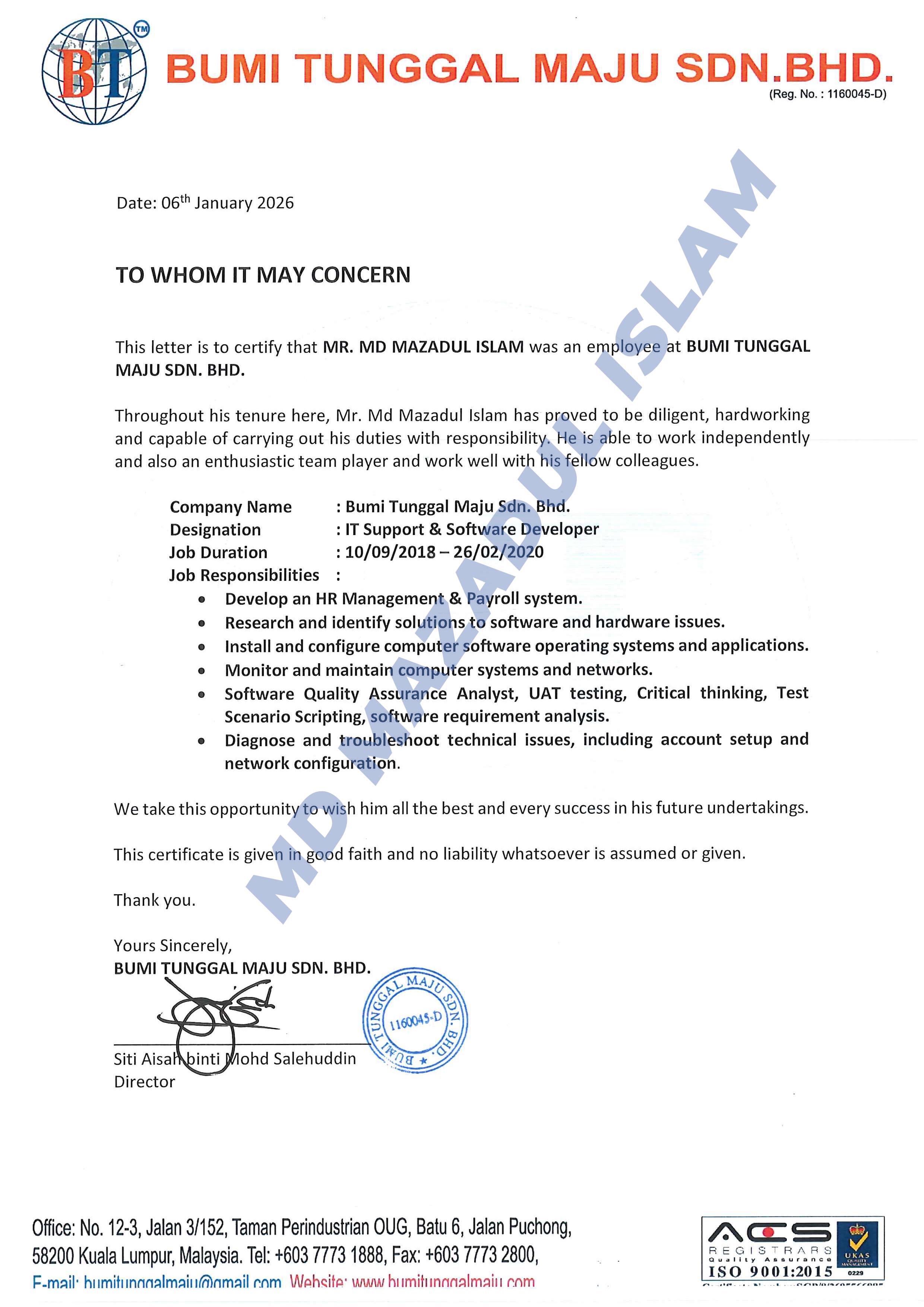
  Bumi Tunggal Maju Sdn Bhd